
CoBMAI 2027: 23–24 Jan, 2027 | Abstract Closes: 26 Dec, 2026
International Conference on Convergence of Biotechnology, Microbiology & Artificial Intelligence
International Conference • Hybrid Mode (Online & On-Campus) • 23–24 January, 2027

International Conference on Convergence of Biotechnology, Microbiology & Artificial Intelligence (CoBMAI 2027)

Theme: Sustainable Development & Circular Economy

Bridging the frontiers of microbial bioprocessing, cellular factories, and cutting-edge computational artificial intelligence to engineer closed-loop, regenerative systems for a cleaner planet.

Organised by: MITS School of Biotechnology, Bhubaneswar, Odisha, India - 751024
In Association with: Microbiologist Society, India (MBSI)
Conference Dates
23–24 January, 2027 (Hybrid)
Conference Venue
Basant Auditorium, MSB Bhubaneswar
Abstract Submissions
Proceedings & Journals
Springer, Nature & SCOPUS Indexed
Conference Inauguration Countdown (23–24 Jan, 2027):
00
Days
00
Hours
00
Mins
00
Secs
8
Multidisciplinary Research Tracks
30+
Eminent Keynote & Invited Speakers
2
Best Presentation Awards (Oral & Poster)
100%
Peer-Reviewed Indexed Journal Publication
In Association With
Organiser
MITS School of Biotechnology (MSB)
•
Conference Association
Microbiologists Society, India (MBSI)
•
Academic Partner
SOA University, Odisha, India
•
Industry Partner
EXPO BIOTECH
•
Corporate Partner
MITS MEGA FOOD PARK
About The Event & Organizers

Catalyzing Scientific Synergy

Bringing together biologists, computer scientists, industry pioneers, and policymakers to create intelligent, circular bioprocesses.

International Conference on Convergence of Biotechnology, Microbiology & Artificial Intelligence

Transitioning to a sustainable future requires moving away from the traditional "take-make-waste" industrial model and building closed-loop, regenerative systems. Microbial Biotechnology offers nature's best tools to achieve this—using microorganisms to recycle waste, generate clean energy, clean up pollution, and manufacture eco-friendly materials.

However, biological systems are complex and unpredictable, making them difficult to scale up for global industrial use. By combining microbiology with Computational Artificial Intelligence (AI), we can overcome these limitations. AI algorithms, machine learning, and digital modeling allow researchers to predict microbial behavior, design custom enzymes, optimize metabolic pathways, and monitor industrial bio-factories in real time.

CoBMAI 2027 provides a dynamic interdisciplinary platform for researchers, academicians, bioengineers, microbiologists, biotechnologists, computational scientists, data scientists, industry professionals, entrepreneurs, and policymakers to exchange ideas and explore emerging innovations at the interface of biological sciences and artificial intelligence.

Closed-Loop Circular Systems
AI Metabolic Pathway Design
Real-time Biofactory Digital Twins
Industry-Academia Synergies
"When natural biological systems meet computational intelligence, humanity unlocks the ultimate blueprint for sustainable planetary health."
Zero-Waste Industrial Transition
AI-Assisted Enzyme & Strain Design
Global Sustainable Bioeconomy

About MITS Group, Odisha

MITS Group, Odisha, promoted by the Basantdevi Charitable Trust, is a multidisciplinary educational and research powerhouse with a prominent presence in higher education, engineering, biotechnology, research, and emerging technology.

The Group encompasses prestigious institutions including MITS School of Biotechnology (MSB), MITS Engineering College, and MITS Institute of Polytechnic, alongside spearheading impactful initiatives in biotechnology, biofuel, food processing, and translational research. MITS Group strongly emphasizes quality education, practical experiential learning, research, innovation, entrepreneurship, and industry-oriented skill development.

Its multidisciplinary ecosystem promotes close collaboration across science, biotechnology, engineering, and emerging computer technologies, with a strong focus on sustainable development, bioeconomy, and circular economy. Through its visionary academic and research initiatives, the Group remains deeply committed to innovation, collaboration, and human-resource development in Odisha and across the nation.

Microbiologists Society, India (MBSI)

Microbiologists Society, India (MBSI) is a premier professional scientific organization dedicated to advancing microbiology, biotechnology, and allied life sciences through cutting-edge research, education, scientific exchange, and national outreach.

MBSI provides a common collaborative platform for students, researchers, academicians, and industry professionals to share scientific knowledge, foster collaborations, and encourage innovation. The Society actively organizes national and international conferences, seminars, guest lectures, career-development programmes, scientific research activities, and merit awards, while supporting student engagement through its vibrant network of student units established across India and abroad.

Department of Biotechnology (MSB)

Established in 2003, the Department of Biotechnology at MITS School of Biotechnology (MSB) has emerged as a vibrant center of excellence for education, research, and innovation in modern life sciences. The Department offers M.Sc. Biotechnology, M.Sc. Applied Microbiology, and B.Sc. Biotechnology programmes, catering to the growing academic and professional needs of students in the life sciences.

With 20 highly qualified faculty members and more than 500 students, the Department provides a dynamic academic environment supported by hands-on learning, laboratory-based training, and research-oriented education. Its academic and research activities encompass diverse areas including Molecular Biology, Genetic Engineering, Microbiology, Bioinformatics, Bioprocess Technology, and related areas of modern biotechnology.

The Department places strong emphasis on research, innovation, skill development, and Industry–Academia interaction, encouraging students and researchers to address contemporary challenges in health, environment, agriculture, industrial biotechnology, and sustainable development.

Department of Computer Science & Applications (MSB)

The Department of Computer Science & Applications at MITS School of Biotechnology (MSB), Bhubaneswar, is a premier center for technical education, digital innovation, and applied computational research. Approved by AICTE and affiliated with Utkal University, MSB offers professional undergraduate programs including Bachelor of Computer Applications (BCA) and B.Sc. in Information Technology & Management (B.Sc. ITM).

Situated in Bhubaneswar’s IT corridor, the department combines rigorous academic curricula with modern laboratory infrastructure, preparing future IT professionals, data engineers, and computational researchers through hands-on software engineering, data analytics, artificial intelligence, and intelligent systems education.

Strategic Tenets

The 4 Core Pillars of CoBMAI 2027

Prominently defined in the conference charter, these foundational tenets steer our interdisciplinary mission across biotechnology, microbial sciences, and artificial intelligence.

Pillar 01

Innovative Research

Championing disruptive scientific discovery across microbial bioprocessing, extremophilic biocatalysis, custom enzyme engineering, and state-of-the-art computational artificial intelligence algorithms.

Frontier Science Predictive AI Modeling
Pillar 02

Sustainable Solutions

Transitioning away from the extractive "take-make-waste" model toward regenerative closed-loop biomanufacturing, waste valorization, clean biofuels, and sustainable circular bioeconomy frameworks.

Circular Bioeconomy Zero-Waste Engineering
Pillar 03

Societal Impact

Translating bench-scale laboratory breakthroughs into tangible societal solutions in therapeutics, diagnostics, agricultural resilience, environmental cleanup, and human welfare in Odisha and worldwide.

Healthcare & Agri Public Welfare
Pillar 04

Global Collaboration

Fostering international scientific diplomacy and hybrid academic synergy among leading researchers, academicians, bioengineers, data scientists, policymakers, and industry innovators across continents.

Hybrid Global Reach Cross-Border Synergy
Brochure Highlights

Official Conference Highlights

Experience 7 key academic, industrial, and global engagement dimensions officially scheduled for CoBMAI 2027.

Official Highlight 01

Keynote & Plenary Lectures

Visionary keynotes delivered by internationally renowned scientists, vice-chancellors, and directors of national research laboratories exploring paradigm shifts in biotechnology and AI.

Official Highlight 02

Full Paper Presentation

Rigorous oral presentation sessions for full-length research papers, with accepted manuscripts selected for publication in Springer / Nature proceedings & SCOPUS indexed journals.

Official Highlight 03

Poster Presentations

Dedicated interactive poster exhibition sessions providing young scholars, researchers, and students an international forum to showcase empirical experiments and novel concepts.

Official Highlight 04

Research–Academia Interaction

Structured networking panels linking faculty and research fellows across universities and autonomous institutions to forge joint research projects, grant applications, and co-authorships.

Official Highlight 05

Industry–Academia Interaction

High-level bridge sessions between academic scientists and corporate biotechnology, bioinformatics, and pharma enterprises to accelerate technology transfer and commercial bio-manufacturing.

Official Highlight 06

Awards & Recognition

Special conference honors and best presentation citations recognizing exceptional research novelty, oral delivery, and poster innovation exclusively for student and scholar delegates.

Official Highlight 07

International Collaboration

Global hybrid academic exchange connecting institutions across India, the United States, Germany, South Korea, Vietnam, and beyond, driving collective solutions for circular bioeconomies.

CONFERENCE AWARDS

Honoring Scientific Excellence & Novelty

To foster scientific curiosity, innovation, and presentation excellence, the organizing committee has instituted prestigious awards to recognize outstanding research contributions. The competition is open only to young research scholars and students.

Best Oral Presentation

Conferred to the most exceptional oral presentation based on scientific rigor, research methodology, originality, clarity, and handling of Q&A.

Best Poster Presentation

Posters presented by Ph.D. scholars and young students will be rigorously evaluated by an expert jury for visual communication, scientific depth, and findings.

Thematic Research Tracks

8 Multidisciplinary Conference Tracks

Submit your original research in any of our specialized tracks spanning biotechnology, microbiology, artificial intelligence, and circular bioeconomy.

Track 1 • MEVB 01

Microbial Enzymes and Value-added Bio-products

Novel enzyme discovery, extremophilic biocatalysts, enzyme immobilization, and high-value metabolite biosynthesis for commercial and therapeutic sectors.

Extremophiles Biocatalysis Secondary Metabolites Enzyme Engineering
Track 2 • IMBT 02

Industrial Microbiology & Bioprocess Technology

Fermentation science, upstream & downstream bioprocessing, bioreactor engineering, microbial strain improvement, and metabolic scaling.

Fermentation Bioreactors Downstream Processing Scale-up Modeling
Track 3 • SAFP 03

Smart Agriculture & Food Processing

Biofertilizers, bio-pesticides, microbiome enhancement in soil, precision agriculture, smart food safety monitoring, and post-harvest preservation.

Biofertilizers Soil Microbiome Smart Packaging Food Safety
Track 4 • MBBE 04

Marine Biotechnology & Blue Economy

Exploring marine microbial biodiversity, deep-sea bio-prospecting, algal biofuels, aquaculture health, and ocean sustainability initiatives.

Marine Microbes Algal Biofuels Blue Carbon Aquaculture
Track 5 • MPB 05

Medical and Pharmaceutical Biotechnology

Therapeutic proteins, recombinant vaccines, antimicrobial resistance (AMR) mitigation, biosimilars, and targeted biological drug delivery.

Vaccine Development AMR Solutions Antibody Therapeutics Drug Delivery
Track 6 • CEWV 06

Circular Economy & Waste Valorization

Bioremediation, conversion of agricultural and industrial biomass into bioplastics, biochar, bio-hydrogen, and closed-loop waste transformation.

Bioremediation Bioplastics (PHA/PLA) Waste-to-Energy Circular Bioeconomy
Track 7 • CBB 07

Computational Biology and Bioinformatics

Genome analysis, phylogenetic modeling, structural bioinformatics, macromolecular simulation, metagenomics, and big-data biological pipelines.

Structural Modeling Metagenomics Genomics Pipelines Proteomics
Track 8 • AVB 08

AI in Drug, Vaccine Development & Biotechnology

Machine learning algorithms for de novo molecular design, generative AI in protein engineering, predictive metabolic fluxes, and biofactory digital twins.

Generative AI Protein Design Virtual Screening Digital Biofactories
Call for Papers & Posters

Submission Guidelines & Official Brochure

The Organizing Committee cordially invites submission of Posters or Full Papers for presentation and high-impact publications.

Official Portal Live • Submissions Open

Dedicated Abstract Submission Portal

The official portal for CoBMAI 2027 abstract submissions is live. Authors, research scholars, and students can submit their 200–300 word structured abstracts online directly through the dedicated MSB portal form before 26 December, 2026.

Submit Abstract Online
Conference Documentation

Download Official Brochure & Abstract Template

Access the official 4-page conference brochure, formatted sample abstract template (.docx / .pdf), and author guidelines.

Official Conference Brochure

Complete 4-page leaflet featuring conference themes, keynote speakers, advisory board, fee structures, and venue logistics.

Download Brochure (PDF)

Sample Abstract Template

Pre-formatted template adhering to official typography, affiliations, and structure. Available in editable Word (.docx) and printable PDF.

Abstract Guidelines

Review formatting rules: 200–300 words, Times New Roman 12pt, 4–6 keywords, underlined presenting author, and A4 1-inch margins.

View Specifications
Milestone Schedule

Official Important Dates

Mark your calendar for key submission, notification, and registration milestones.

October 25, 2026

Abstract Submission Opens

Online portal is active for submission of 200–300 word abstracts across all 8 thematic tracks. Submit via Dedicated Portal →

Oct 25 – Nov 07, 2026

Early Bird Registration Window

Avail discounted registration rates for delegates, research scholars, students, and corporate partners.

December 26, 2026

Abstract Submission Closes

Final deadline for submitting abstracts for oral and poster presentation evaluations.

December 30, 2026

Acceptance Notification of Abstracts

Authors notified of peer-review decisions regarding oral or poster presentation acceptance.

January 05, 2027

Full Paper Submission Deadline

Submission of full-length research manuscripts for peer-reviewed journal & proceedings consideration.

Dec 20, 2026 – Jan 15, 2027

Normal Registration Window

Standard registration window for national and international delegates.

Jan 16 – 22, 2027

Registration with Late Fee

Final online delegate registration period before the conference.

January 23 – 24, 2027

On-Spot Registration & Conference Days

Inauguration at Basant Auditorium, MSB Bhubaneswar • Plenary lectures, oral/poster presentations, and awards ceremony.

Springer & Nature Proceedings

Accepted papers shall be published in Springer, Nature conference proceedings (Anticipating for Approval).

SCOPUS Indexed Journals

Selected high quality papers will be published in SCOPUS indexed Journals (Anticipating for Approval).

Abstract Souvenir (ISBN)

A souvenir of all abstracts including plenary, invited lectures, and contributory presentations will be officially released.

Abstract Formatting Guidelines

Title: Times New Roman, 14-point, bold, centrally aligned.
Author(s): Times New Roman, 12-point; presenting author's name must be underlined.
Affiliation(s): Times New Roman, 11-point, including department, institution, city and country.
Corresponding Author: Provide a valid working email address.
Abstract Text: Times New Roman, 12-point, single-spaced, justified alignment.
Length: 200–300 words (excluding title, authors, affiliations, and keywords).
Keywords: 4–6 keywords placed immediately below the abstract.
Page Layout: Standard A4 paper, 2.54 cm (1 inch) margins on all sides. Language: English.
Click to Preview Official Sample Abstract Format

Purification of cellulase from Penicillium Spp. and its application for effective hydrolysis of lignocellulosic biomass for bioethanol production

Rashmi Ranjan Mishra1, Barsha Samantray2, Bikash Chandra Behera3* and Hrudayanath Thatoi4*

1 Department of Biotechnology, MITS School of Biotechnology, 2 (P), Infocity, Patia, Bhubaneswar-751024
2 Department of Biotechnology, Maharaja Sriram Chandra Bhanja Deo University, Baripada-757003
3 School of Biological Sciences, NISER, Bhubaneswar, 752050, Odisha, India
4 Center of Industrial Biotechnology Research, SOA University, Bhubaneswar-751030
Corresponding Authors: thatoinou@gmail.com, director.cibr@soa.ac.in, bikash@niser.ac.in

ABSTRACT: In the present study, fourteen cellulolytic fungal strains were isolated from mangrove soils and characterized for robust cellulase production. Optimization of submerged fermentation parameters led to heightened specific activity and thermal stability, enabling superior saccharification yields from agricultural lignocellulosic biomass for sustainable bioethanol generation.
Keywords: Penicillium spp., Cellulase, Lignocellulose, Enzymatic Hydrolysis, Bioethanol, Circular Bioeconomy.

Conference Support (Awaited)

Institutional and governmental research bodies under proposal for patronage and collaboration

DBT Dept. of Biotechnology, Govt. of India
DST Dept. of Science & Technology, Govt. of India
Ministry of Jal Shakti Govt. of India
Ministry of Earth Sciences Govt. of India
CSIR Council of Scientific & Industrial Research
ANRF Anusandhan National Research Foundation
Global Thought Leaders

Keynote & Invited Speakers

Distinguished researchers, university leaders, and corporate scientists addressing CoBMAI 2027.
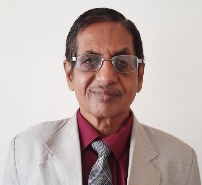
Hover over or tap any card marked with Keynote Topic to reveal their lecture title.
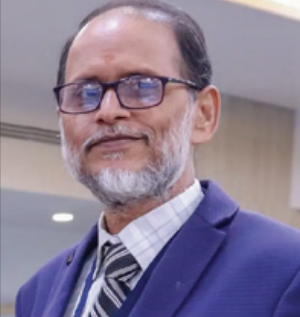
Prof. A.M. Deshmukh
MBSI President • Keynote

Prof. A.M. Deshmukh

President, MBSI, India
Microbiologists Society, India (MBSI)
Keynote Topic
Keynote Topic
“Biotechnological solution to Electronic Waste”
Prof. A.M. Deshmukh
Prof. Siba Prasad Adhikary
Former VC • Keynote

Prof. Siba Prasad Adhikary

Former Vice-Chancellor
Fakir Mohan University, Balasore, Odisha
Keynote Topic
Keynote Topic
“Bioprospecting of micro-algae and cyanobacteria: role of Culture collections for providing authenticated algal materials for entrepreneurship”
Prof. Siba Prasad Adhikary
Dr. Apurba Kumar Sarkar
Director • Bangladesh

Dr. Apurba Kumar Sarkar

Director
Paradise Scientific Company Ltd., Dhaka, Bangladesh
Keynote Topic
Keynote Topic
“Multidrug-Resistant Non-Fermenters”
Dr. Apurba Kumar Sarkar
Dr. Puspa Raj Poudel
Assistant Dean • Nepal

Dr. Puspa Raj Poudel

Assistant Dean (Academics), IAAS
Tribhuvan University, Kirtipur, Kathmandu, Nepal
Keynote Topic
Keynote Topic
“Transforming biotechnology and microbiology for human and environmental health”
Dr. Puspa Raj Poudel
Prof. Anil Kumar Anal
International Keynote • Thailand

Prof. Anil Kumar Anal

Professor, Dept. Food, Agriculture and Bioresource
Asian Institute of Technology (AIT), Pathumthani, Thailand
Keynote Topic
Keynote Topic
“Advancing Alternative Proteins and Future Foods Through Sustainable Biomanufacturing: Transforming Food Systems for a Healthier Future”
Prof. Anil Kumar Anal
Dr. Ramesh C. Ray
Former Head • ICAR-CTCRI

Dr. Ramesh C. Ray

Former Principal Scientist & Head, ICAR-CTCRI
Former Project Manager, Int. Potato Center (Peru), Odisha State, India
Keynote Topic
Keynote Topic
“Bioethanol from Food Crops: Perspective and challenges”
Dr. Ramesh C. Ray
Dr. Gaurav Mudgal
Professor • Invited Speaker

Dr. Gaurav Mudgal

Professor, Department of Biotechnology
Chandigarh University, Mohali, Punjab
Keynote Topic
Keynote Topic
“Old Tricks, New Codes: Biotechnology at the Crossroads of Microbes, Machines, and Minds”
Dr. Gaurav Mudgal
Dr. Sonali Mohapatra
Senior Scientist • Germany

Dr. Sonali Mohapatra

Senior Scientist
Anhalt University of Applied Sciences, Köthen, Germany
Keynote Topic
Keynote Topic
“Whey to Value: Microbial Engineering and Pilot-Scale Fermentation for Next-Generation Synbiotics”
Dr. Sonali Mohapatra
Prof. (Dr.) Mrutyunjay Jena
Professor • Keynote Speaker

Prof. (Dr.) Mrutyunjay Jena

Professor, PG Department of Botany
Berhampur University, Bhanja Bihar, Berhampur, Odisha
Keynote Topic
Keynote Topic
“Bioprospecting of Seaweeds from Chilika Lagoon for Novel Therapeutic Applications”
Prof. (Dr.) Mrutyunjay Jena
Prof. Biswajit Rath
Professor • Invited Speaker

Prof. Biswajit Rath

Professor, Department of Biotechnology
Maharaja Sriram Chandra Bhanja Deo University (MSCBDU), Baripada
Keynote Topic
Keynote Topic
“Bioprospecting of lichen from Similpal Biosphere Reserve, Odisha, India”
Prof. Biswajit Rath
Dr. Prakash M. Halami
Chief Scientist • CSIR-CFTRI

Dr. Prakash M. Halami

Chief Scientist & Head, Microbiology & Fermentation Technology
CSIR - Central Food Technological Research Institute (CFTRI), Mysuru
Keynote Topic
Keynote Topic
“Integration of Microbiology, Biotechnology and Artificial Intelligence in the Development of Functional Postbiotics for Metabolic Health”
Dr. Prakash M. Halami
Prof. Chandra Shekhar Gahan
Professor • Invited Speaker

Prof. Chandra Shekhar Gahan

Professor, Department of Biotechnology
Guru Ghasidas Vishwavidyalaya, Bilaspur, Chhattisgarh
Keynote Topic
Keynote Topic
“Bioleaching of copper slag using iron and sulphur oxidising chemolithotrophic acidophiles: A circular economy approach”
Prof. Chandra Shekhar Gahan
Prof. P.K. Dasmohapatra
Professor • Keynote Speaker

Prof. P.K. Dasmohapatra

Professor, Department of Microbiology
Raiganj University, Raiganj, West Bengal
Keynote Topic
Keynote Topic
“Harnessing Probiotic-Mediated Fermentation for Phytochemical Valorization: Exploring Multifunctional Health Benefits Through the Probiotic–Metabiotic Paradigm”
Prof. P.K. Dasmohapatra
Prof. M. Jayaprakashvel
IQAC Coordinator • AMET

Prof. M. Jayaprakashvel

Coordinator – IQAC & Special Officer – ID, Prof. of Marine Biotechnology
Academy of Maritime Education and Training (AMET), Chennai, Tamil Nadu
Keynote Topic
Keynote Topic
“Bioprospecting of Marine Microorganisms for Agricultural Biotechnological, Industrial, Medical and Environmental Applications”
Prof. M. Jayaprakashvel
Dr. Shailendra Kumar
Professor & Head • Invited Speaker

Dr. Shailendra Kumar

Prof and Head, Department of Microbiology
RMLAU, Ayodhya (Dr. Rammanohar Lohia Avadh University)
Dr. Biswajit Das
Postdoctoral Researcher • USA

Dr. Biswajit Das

Postdoctoral Researcher
University of California, Santa Cruz (UCSC), California, USA
Keynote Topic
Keynote Topic
“How Tumor-Initiating Cells Hijack the Immune System: The Hidden Battle in Cancer”
Dr. Biswajit Das
Dr. Ranjan Kumar Mohapatra
Postdoctoral Researcher • South Korea

Dr. Ranjan Kumar Mohapatra

Postdoctoral Researcher
Chungnam National University, Daejeon, South Korea
Keynote Topic
Keynote Topic
“Exploring Anammox Bacteria: Biochemical Mechanisms, Metagenomic insights, and Full-Scale Application in Wastewater Treatment Plants”
Dr. Ranjan Kumar Mohapatra
Prof. Keshab Chandra Mondal
Professor & HOD • Keynote Speaker

Prof. Keshab Chandra Mondal

Professor & Head, Department of Microbiology
Vidyasagar University, Midnapore, West Bengal
Keynote Topic
Keynote Topic
“Production of cyclodextrin from low cost vegetables using recombinant alpha-amylase”
Prof. Keshab Chandra Mondal
Prof. H.N. Thatoi
Director CIBIC • Keynote Speaker

Prof. H.N. Thatoi

Director, CIBIC, SOA University • National Coordinator, MBSI
Siksha 'O' Anusandhan (SOA) Deemed to be University, Bhubaneswar
Keynote Topic
Keynote Topic
“Harnessing Microbes for Biofuel Production from Agricultural waste biomass: Advances Challenges and Future Prospects”
Prof. H.N. Thatoi
Dr. Mrunmaya Kumar Panda
Research Faculty • USA

Dr. Mrunmaya Kumar Panda

Research Faculty / Scientist
Long Island University, New York, USA
Keynote Topic
Keynote Topic
“Polymicrobial Pathogenesis of Uterine Inflammatory Disease: Microbial Interactions, Metabolic Cross-Talk, and Host Inflammatory Responses”
Dr. Mrunmaya Kumar Panda
Prof. J. Dandpat
Chairperson PG Council • Invited Speaker

Prof. J. Dandpat

Professor & Head, Dept. of Biotechnology; Chairperson, PG Council
Utkal University, Vani Vihar, Bhubaneswar, Odisha
Dr. Subhasmita Mohapatra
Research Faculty • USA

Dr. Subhasmita Mohapatra

Research Faculty / Scientist
City University of New York (CUNY), College of Staten Island, USA
Keynote Topic
Keynote Topic
“Advancing Glioblastoma Immunotherapy: Innate Immune Cell Repolarization and Durable Tumor Remission Through APG157DS”
Dr. Subhasmita Mohapatra
Dr. Amit Kumar Mishra
IEEE Senior Member • UK

Dr. Amit Kumar Mishra

Technology & Innovation Manager, RC Fornax | Hon. Professor, UCL
RC Fornax, Bristol, UK • University College London (UCL), UK
Umamaheswar (Achari) Kakinada
Director Wireless R&D • USA

Umamaheswar (Achari) Kakinada

Director, Wireless R&D
Charter Communications, Greenwood Village, Colorado, USA
Keynote Topic
Keynote Topic
“Secure Communications for BioInformatic”
Umamaheswar (Achari) Kakinada
Dr. Ashwini Kumar Rath
Founder & CEO • Industry Leader

Dr. Ashwini Kumar Rath

Founder & Chief Executive Officer
Batoi Systems, Odisha
Dr. Tapas Mishra
AI Strategist • Industry Mentor

Dr. Tapas Mishra

AI/Digital Strategist & Start-up Mentor
Former Executive Leader at Infosys and Tata Consultancy Services (TCS)
Dr. Bibhudhendu Pati
Professor & HOD • Invited Speaker

Dr. Bibhudhendu Pati

Professor, Department of Computer Science
Rama Devi Women’s University, Bhubaneswar, Odisha
Dr. Nibedita Adhikari
Assistant Professor • Invited Speaker

Dr. Nibedita Adhikari

Assistant Professor, Dept. of Computer Science
Utkal University, Vani Vihar, Bhubaneswar, Odisha
Dr. Subhankar Mishra
Faculty • NISER Bhubaneswar

Dr. Subhankar Mishra

Faculty, School of Computer Science
National Institute of Science Education and Research (NISER), Bhubaneswar
Keynote Topic
Keynote Topic
“LLM and Agents”
Dr. Subhankar Mishra
Dr. Rakesh Chandra Balabantaray
Associate Professor • IIIT-BH

Dr. Rakesh Chandra Balabantaray

Associate Professor, Dept. of Computer Science & Engineering
International Institute of Information Technology (IIIT), Bhubaneswar
Keynote Topic
Keynote Topic
“From Microbial Intelligence to AI (Transforming the future of Biotechnology through NLP)”
Dr. Rakesh Chandra Balabantaray
Prof. (Dr.) Ranjan Kumar Dash
Professor • OUTR Bhubaneswar

Prof. (Dr.) Ranjan Kumar Dash

Professor, Department of Computer Applications
Odisha University of Technology and Research (OUTR), Bhubaneswar
Mr. Sambit Kumar Panda
Scientist-F • Senior Director

Mr. Sambit Kumar Panda

Scientist-F, Senior Director
National Informatics Centre (NIC), MeitY, Govt. of India, Bhubaneswar
Keynote Topic
Keynote Topic
“Artificial Intelligence in Biotechnology and Microbiology: Opportunities, Challenges, and Future Perspectives”
Mr. Sambit Kumar Panda
Prof. Satchidananda Dehuri
Keynote Address • FMU

Prof. Satchidananda Dehuri

Professor, Dept. of Computer Science & ICT
Fakir Mohan University, Balasore, Odisha
Keynote Topic
Keynote Topic
“Supervised Machine Learning for Biological Data Analysis”
Prof. Satchidananda Dehuri
Governance & Mentorship

Organising & Advisory Committee

Guided by distinguished leadership, academic stalwarts, and committed conference convenors.

Organisation Leadership

Chief Patron

Sri Balakrishna Panda

Chairman, MITS Group & BCT
Patron

Er. Sriram Panda

Chief Executive, MITS Group
Patron

Mr. Biswajeet Panda

Vice - Chairman, MITS Group & BCT

Conference Leadership

General Chair

Dr. A. M. Deshmukh

National President, Microbiologists Society, India (MBSI)
Co-General Chair

Prof. H. N. Thatoi

Director, CIBR, SOA University • National Coordinator, MBSI, India
Conference Chair

Prof. G. K. Panda

Director, MITS School of Biotechnology (MSB)
Program Chair

Prof. P. K. Behera

Former Professor, HOD, Utkal University
Program Chair

Prof. (Dr.) T. C. Kar

Professor Emeritus, MITS School of Biotechnology
Convenor

Dr. R. R. Mishra

HOD, Dept. of Biotechnology, MITS School of Biotechnology
Leadership • CS

Dr. T. Nayak

HOD, Dept. of Computer Science, MITS School of Biotechnology
Leadership • IQAC

Dr. S. Maharana

Coordinator - IQAC, IIC-AICTE • Assoc. Prof., Dept. of CS, MSB
Leadership • BT

Dr. M. Mishra

Assoc. Professor, Dept. of Biotechnology, MITS School of Biotechnology

Organising Committee

Biotechnology

Prof. (Dr.) Abheepsa Mishra

Department of Biotechnology, MSB
Computer Science

Prof. Aditya Narayan Sahoo

Department of Computer Science, MSB
Biotechnology

Prof. Ananya Mardina

Department of Biotechnology, MSB
Biotechnology

Prof. (Dr.) Ankur Singh

Department of Biotechnology, MSB
Biotechnology

Prof. Barsa Samantaray

Department of Biotechnology, MSB
Computer Science

Prof. Bhagyashree Patra

Department of Computer Science, MSB
Literature

Prof. Chandrabhanu Mishra

Department of Literature, MSB
Computer Science

Prof. Chhabi Sethi

Department of Computer Science, MSB
Biotechnology

Prof. (Dr.) Diptipriya Sethi

Department of Biotechnology, MSB
Literature

Prof. (Dr.) Itaswari Kumara

Department of Literature, MSB
Computer Science

Prof. Jyotirmayee Sahoo

Department of Computer Science, MSB
Computer Science

Prof. Manisha Jena

Department of Computer Science, MSB
Computer Science

Prof. Milan Das

Department of Computer Science, MSB
Computer Science

Prof. Priyanka Sahu

Department of Computer Science, MSB
Biotechnology

Prof. (Dr.) Rudrakhya S. Panda

Department of Biotechnology, MSB
Computer Science

Prof. Santosh Ku. Nayak

Department of Computer Science, MSB
Biotechnology

Prof. Siddharth Parida

Department of Biotechnology, MSB
Mathematics

Prof. Siva Ranjan Pradhan

Department of Mathematics, MSB
Management

Prof. Smita Dey

Department of Management, MSB
Biotechnology

Prof. (Dr.) Subrat Kumar Kar

Department of Biotechnology, MSB
Biotechnology

Prof. (Dr.) Suchismita Nivedita

Department of Biotechnology, MSB

National Advisory Committee

Prof. (Dr.) A. M. Deshmukh

National President, Microbiologists Society, India

Prof. H. N. Thatoi

Director, CIBR, SOA University, National Coordinator, MBSI, India

Prof. J. Dandpat

Prof. & Head, Dept. of Biotechnology, Utkal University, Odisha, India

Prof. B. B. Mishra

Former Professor, Dept. of Microbiology, OUAT, Bhubaneswar, Odisha, India

Dr. Ramesh C. Ray

Former Principal Scientist & Head, ICAR-CTCRI, Bhubaneswar, Odisha, India

Prof. Chandra Sekhar Gahan

Prof., Biotechnology, SSIE&R, Guru Ghasidas Vishwavidyalaya, Chhattisgarh, India

Prof. S. P. Adhikary

Former Prof. of Biotechnology, Visva-Bharati, Santiniketan • Former VC, F.M. University, Balasore

Prof. C. C. Rath

Former Prof., Dept. of Life Sciences, Rama Devi Women’s University, Bhubaneswar

Prof. P. K. Das Mohapatra

Head, Dept. of Microbiology, Raiganj University, West Bengal

Prof. K. C. Mondal

Dept. of Microbiology, Vidyasagar University, West Bengal

International Advisory Committee

United Kingdom

Dr. Amit Kumar Mishra

IEEE Sr. Member • Tech. & Inno. Manager, RC Fornax, Bristol • Hon. Prof., UCL, UK
Nepal

Dr. Puspa Raj Poudel

Assistant Dean (Academics), Institute of Agriculture & Animal Science, Tribhuvan University, Nepal
Thailand

Prof. Anil Kumar Anal

Dept. Food, Agriculture and Bioresource, Asian Institute of Technology (AIT), Thailand
Bangladesh

Dr. Apurba Kumar Sarkar

Director, Paradise Scientific Company Ltd., Dhaka-1203, Bangladesh
USA

Mr. Umamaheswar (Achari) Kakinada

Director, Wireless R&D, Charter Communications, Colorado, USA
USA

Dr. Subhasmita Mohapatra

City University of New York, College of Staten Island, USA
Germany

Dr. Sonali Mohapatra

Anhalt University of Applied Sciences, Köthen, Germany
South Korea

Dr. Ranjan Kumar Mohapatra

Chungnam National University, South Korea
USA

Dr. Mrunmaya Kumar Panda

Long Island University, New York, USA
USA

Dr. Biswajeet Das

University of California, Santa Cruz, USA
Delegate Registration & Fee Matrix

Registration Fee Matrix & Instant Payment

Official registration fee tiers for Indian and International delegates. Register online with instant confirmation via official Razorpay gateways or bank transfer.

Dedicated Registration & Payment Portal
Need a dedicated, streamlined registration and checkout portal?

Access individual category checkout links, bank wire transfer details, concession policy, and FAQs.

Open Dedicated Portal

Online Registration & Payment Gateways are Now Live!

Instant delegate registration is officially open. Click on your respective category below to register and complete your payment securely via Razorpay (supports UPI, Net Banking, Credit/Debit Cards, & International Cards) or pay via NEFT/RTGS bank transfer.

Registration Category Indian & International Tiers Early Bird Registration Oct 25 – Nov 07, 2026 In Time Registration Dec 20, 2026 – Jan 15, 2027 Late Registration Jan 16 – 22, 2027 On Spot Registration Jan 23 – 24, 2027 Instant Online Payment Razorpay Gateway
Indian Delegates (INR)
Full Delegates ₹ 2,000 ₹ 2,500 ₹ 3,000 ₹ 3,000 Register Now
Accompanying Person ₹ 2,000 ₹ 2,000 ₹ 2,000 ₹ 2,000 With Primary Registration (Optional)
Research Scholars / Students ₹ 1,000 ₹ 1,000 ₹ 1,200 ₹ 1,200 Register Now
Industry / Corporate ₹ 4,500 ₹ 5,000 ₹ 5,500 ₹ 5,500 Register Now
International Delegates (USD)
Full Delegates US$ 100 US$ 125 US$ 100 US$ 150 Register Now
Accompanying Person US$ 75 US$ 75 US$ 75 US$ 100 With Primary Registration (Optional)
Research Scholars US$ 75 US$ 100 US$ 125 US$ 125 Register Now

Official Bank Payment Mode (NEFT / RTGS / IMPS)

Beneficiary Name MITS School of Biotechnology
Bank Name HDFC Bank, Infocity, Patia
Bank Account No. 50100097085166
IFSC Code HDFC0004013
Important: After completing bank transfer, please email the transaction receipt / UTR number along with your delegate details to CoBMAI2027@msb.ac.in.

Official Registration Fee Concessions

50% Concession

Faculty, Research Scholars & Students from MITS Group of Institutions can avail 50% relaxation in the registration fee.

25% Concession

Registered Members of Microbiologists Society, India (MBSI) can avail 25% relaxation in the registration fee.

Note: Delegates availing registration fee concessions will not be provided conference dinner and delegate kit as applicable for full-fare delegates.
Official Razorpay Payment Links

Select Your Registration Package

Select your category below to initiate instant registration through the official Razorpay payment portal.

Indian Delegate Packages For students, scholars, faculty, and corporate participants in India

Scholars & Students

For Indian undergraduate, postgraduate, and Ph.D. scholars.

₹ 1,000 / Early Bird • Normal
Plenary & Technical Sessions
Oral / Poster Presentation Slot
Young Scholar Presentation Award Eligibility
Delegate Kit & Abstract Souvenir
Lunch & High Tea Refreshments
Participation Certificate
Register & Pay (₹1,000)

Industry & Corporate

For corporate delegates, entrepreneurs, & startups.

₹ 4,500 / Early Bird (₹5,000 Normal)
All Conference & Plenary Tracks
Industry-Academia Panel Access
Networking & B2B Roundtables
Executive Delegate Kit
Formal Delegate Certificate
Register & Pay (₹4,500)
International Delegate Packages For global scholars, overseas scientists, and foreign participants (Hybrid / On-Campus)
International Scholars

International Scholars

For overseas Ph.D. scholars, graduate researchers, and foreign students.

US$ 75 / Early Bird ($100 Normal)
Hybrid Mode Access (Online or On-Campus)
Oral / Poster Presentation Opportunity
Proceedings & Souvenir Publication
Young Researcher Award Track Eligibility
International Participation Certificate
Register & Pay ($75 USD)
Logistics & Travel

Venue, How to Reach & Accommodation

MITS School of Biotechnology (MSB) is conveniently located in the IT corridor of Bhubaneswar, Odisha with seamless air, rail, and road connections.

Official Conference Venue

Basant Auditorium

MITS School of Biotechnology (MSB)

2(P), Infocity, Patia, Chandaka Industrial Estate, Bhubaneswar – 751024, Odisha, India

Open in Google Maps App Brochure Venue Map

Interactive Campus Location & Directions

MITS School of Biotechnology, Infocity, Patia, Bhubaneswar (751024)

Get Driving Directions

By Air

~15 km from Campus

The nearest airport is Biju Patnaik International Airport (BBI), Bhubaneswar (~15 km from campus). The airport is well connected with major cities across India including New Delhi, Mumbai, Chennai, Kolkata, Bengaluru, Varanasi, Prayagraj, Patna, Ranchi, Visakhapatnam, and Nagpur. It also provides international connectivity to selected destinations including UAE, Thailand, and Malaysia.

By Train

~15 km from Station

A large number of Superfast, Rajdhani, Vande Bharat, and Express trains originating from all major cities across India are connected directly to Bhubaneswar Railway Station (BBS, ~15 km from campus). Pre-paid taxis and auto-rickshaws are readily available 24/7 right outside the station.

By Road

~8 km from Baramunda Stand

Regular interstate bus services connect Bhubaneswar with neighboring states. The MITS campus is only 8 km from Baramunda Inter-State Bus Stand (ISBT). Within Bhubaneswar, you can easily commute using app cabs (Ola/Uber), auto-rickshaws, and 'Mo Bus' public transit.

Important Accommodation Advisory to All Delegates & Invitees:

Bhubaneswar is a popular pilgrimage & tourist destination in January. Outside participants and delegates are strongly advised to book their hotel accommodation well in advance to avoid last-minute rush and surge pricing.

No Third-Party Authorization: The conference organizers have NOT authorized any external travel agency. All official communications are conducted strictly through CoBMAI2027@msb.ac.in. Accommodation for all invited keynote and plenary speakers will be arranged and booked directly by the conference organizing committee. For any assistance, please feel free to contact the Secretariat.

Explore Odisha

Places to Visit During Your Stay

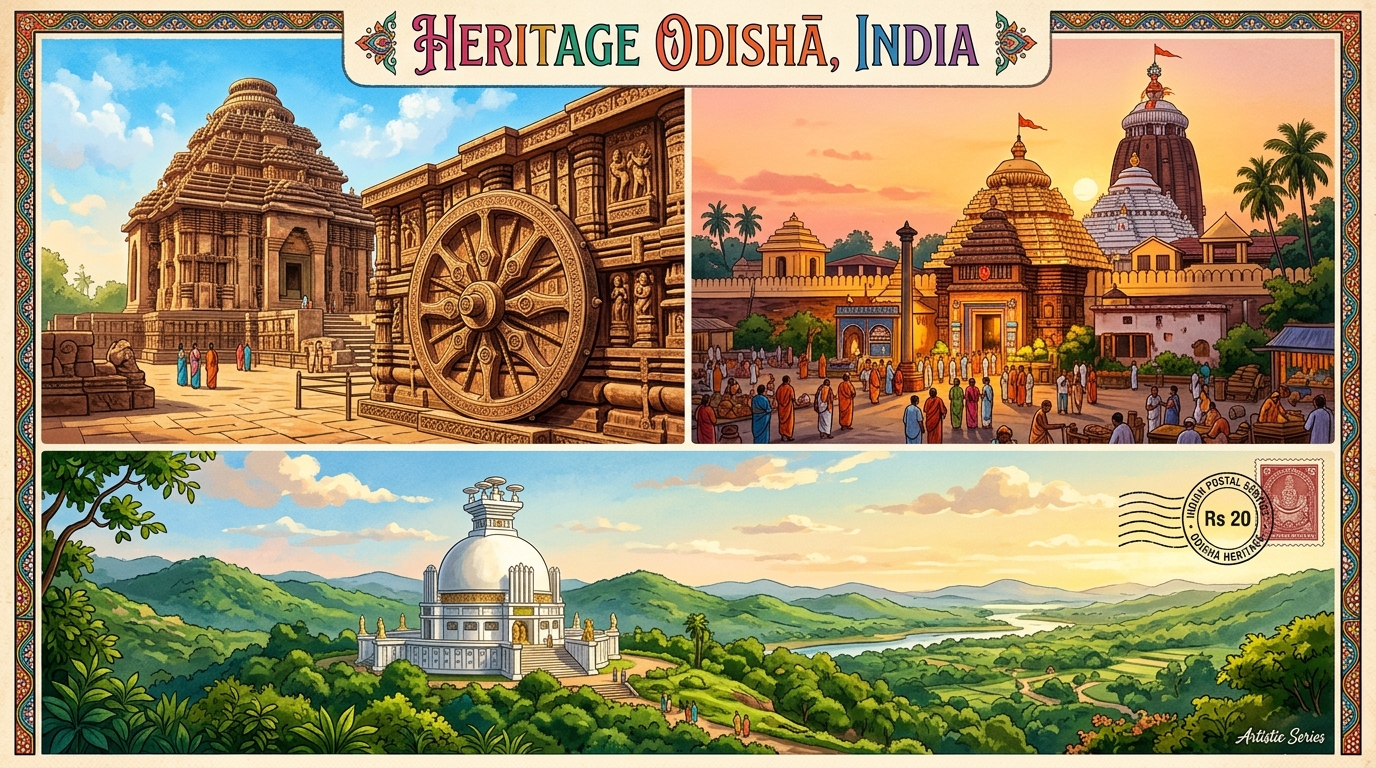
Immerse yourself in the world-renowned temple architecture, peaceful monuments, and coastal beauty of Odisha.

Heritage Odisha - Konark, Jagannath Puri, Dhauli Stupa
Puri (~60 km from Bhubaneswar)

Lord Jagannath Temple, Puri

One of the revered Char Dham pilgrimage sites, famous worldwide for its magnificent 12th-century Kalinga architecture, the sacred sanctum of Lord Jagannath, and the adjacent golden sea beach of Puri.

Konark (~65 km from Bhubaneswar)

Konark Sun Temple

A UNESCO World Heritage Site sculpted as an enormous stone chariot with 24 carved wheels and 7 horses dedicated to Surya, the Sun God. A masterwork of ancient engineering and stone sculpture.

Dhauli Hills (~12 km from Campus)

Dhauli Shanti Stupa

The historic Peace Pagoda built on the banks of River Daya, commemorating the transformation of Emperor Ashoka from warfare to non-violence and Buddhism after the historic Kalinga War.

Secretariat & Queries

Contact Organizing Committee

Have queries about tracks, manuscripts, invitations, or registration? Get in touch with our convenors directly.
Convenor

Dr. Rashmi Ranjan Mishra

Associate Professor and HoD, Dept. Biotechnology, MSB
Conference Chair

Prof. (Dr.) G.K. Panda

Director, MSB Bhubaneswar
Co-Convenor

Dr. Tapaswini Nayak

HoD, Dept. Computer Science, MSB
Co-Convenor

Dr. Mousumi Mishra

Assoc. Professor, Dept. Biotechnology, MSB
Central Conference Communications Desk
Official correspondence for all delegates, authors, and participants.